Lightweight Materials for Automotive Wiring Harness: Enhancing Efficiency Without Compromise
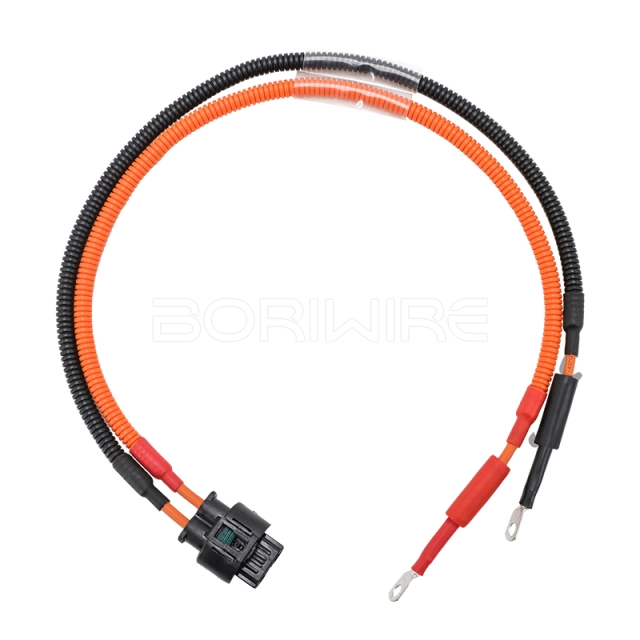
In the relentless pursuit of greater efficiency and extended range, every gram counts in electric vehicle (EV) design. While attention often focuses on batteries and body structures, the automotive wiring harness presents a significant opportunity for weight reduction. A traditional harness can weigh over 50 kilograms, making it a prime candidate for optimization. The strategic use of lightweight materials for automotive wiring harness is no longer a luxury but a critical engineering challenge for leading manufacturers.
This article explores the innovative materials that are helping engineers create lighter, more efficient wiring systems for the next generation of vehicles.
The Drive for Weight Reduction
The principle is simple: reducing vehicle weight directly improves energy efficiency and extends driving range. For EVs, this translates to a competitive advantage. A lighter harness also simplifies assembly and can reduce the load on supporting structures. However, the transition to lightweight materials for automotive wiring harness must be achieved without sacrificing the core requirements of electrical performance, durability, and safety.
Key Materials Driving Innovation
The evolution of harness weight focuses on two main components: the conductors and the insulation/jacketing.
1. Advanced Conductors: Beyond Copper
Copper has been the conductor of choice for decades due to its excellent conductivity. However, it is dense. Engineers are now turning to alternatives:
-
Aluminum Wiring: Aluminum is about 60% lighter than copper for the same volume. While it has lower conductivity (requiring a thicker gauge to carry the same current as copper), advanced alloys and precise engineering have made aluminum a viable option for specific applications within the harness, particularly in low-voltage circuits where weight savings are a priority.
-
Small-Diameter Copper Alloys: Perhaps the most significant innovation is the development of copper alloys that are stronger than pure copper. This increased strength allows for the use of thinner-gauge (smaller diameter) wires while maintaining mechanical durability. A thinner wire means less copper is used, resulting in direct weight savings across the entire harness.
2. High-Performance Insulation and Jacketing
The material surrounding the wire is just as important as the conductor inside. Advancements in polymer science are yielding substantial benefits:
-
Thin-Wall Insulation: Modern engineering-grade materials like cross-linked polyethylene (XLPE) or specially formulated polyvinyl chloride (PVC) provide the same or better dielectric strength and abrasion resistance as traditional insulations but in a thinner layer. This "thin-wall" technology reduces the overall diameter and weight of each wire, with the savings multiplied over hundreds of circuits in a full harness.
-
Lightweight Sleeving and Tapes: Instead of heavy PVC tape, manufacturers are using lightweight woven textile sleeves or non-woven materials for bundling and protecting wire groups. These materials offer excellent protection against heat, abrasion, and chemicals while contributing significantly less weight.
3. Material Optimization in Connectors and Components
Weight savings extend to every part of the harness system. Connector housings are being redesigned using:
Boriwire's Approach to Lightweighting
At Boriwire, we approach weight reduction as a holistic engineering process. It’s not just about substituting one material for another. Our strategy involves:
-
Application-Specific Analysis: We work with clients to analyze the electrical and mechanical requirements of each circuit. This allows us to recommend the optimal material—whether it's a small-diameter copper alloy for a critical high-voltage line or aluminum for a non-critical low-voltage circuit.
-
Design Integration: We use advanced design software to optimize the harness architecture, minimizing total wire length and eliminating unnecessary material use from the start.
-
Validation and Testing: Every lightweight material solution undergoes rigorous testing to ensure it meets all performance, safety, and longevity standards, such as heat aging, fluid resistance, and vibration endurance.
Conclusion: A Lighter Harness for a Longer Range
The intelligent application of lightweight materials for automotive wiring harness is a key enabler for the future of electric mobility. By carefully selecting advanced conductors, thin-wall insulations, and optimized components, manufacturers can achieve substantial weight savings that directly contribute to vehicle efficiency.
Are you looking to reduce the weight and increase the efficiency of your vehicle's wiring system? Partner with Boriwire to leverage our expertise in advanced materials and precision engineering.
Contact us today to discuss your specific lightweighting goals.
Phone / WhatsApp / WeChat: Anemone at +86 1379780 0328
Website: www.boriwire.com
Boriwire – Engineering Lighter, Smarter, and More Efficient Solutions.


